<?xml version="1.0" encoding="UTF-8"?>
<rss version="2.0"
	xmlns:content="http://purl.org/rss/1.0/modules/content/"
	xmlns:wfw="http://wellformedweb.org/CommentAPI/"
	xmlns:dc="http://purl.org/dc/elements/1.1/"
	xmlns:atom="http://www.w3.org/2005/Atom"
	xmlns:sy="http://purl.org/rss/1.0/modules/syndication/"
	xmlns:slash="http://purl.org/rss/1.0/modules/slash/"
	>

<channel>
	<title>Iceland Aurora Photographic &#187; Photography Techniques</title>
	<atom:link href="http://icelandaurora.com/blog/category/photography-techniques/feed/" rel="self" type="application/rss+xml" />
	<link>http://icelandaurora.com/blog</link>
	<description>Photography Techniques Weblog</description>
	<lastBuildDate>Tue, 20 Jul 2010 14:45:42 +0000</lastBuildDate>
	<language>en</language>
	<sy:updatePeriod>hourly</sy:updatePeriod>
	<sy:updateFrequency>1</sy:updateFrequency>
	<generator>http://wordpress.org/?v=3.0.1</generator>
		<item>
		<title>Tony&#8217;s Magic Cloth Technique</title>
		<link>http://icelandaurora.com/blog/2010/07/20/tonys-magic-cloth-technique/#utm_source=feed&amp;utm_medium=feed&amp;utm_campaign=feed</link>
		<comments>http://icelandaurora.com/blog/2010/07/20/tonys-magic-cloth-technique/#comments</comments>
		<pubDate>Tue, 20 Jul 2010 14:45:42 +0000</pubDate>
		<dc:creator>Tony</dc:creator>
				<category><![CDATA[Photography Techniques]]></category>

		<guid isPermaLink="false">http://icelandaurora.com/blog/?p=1209</guid>
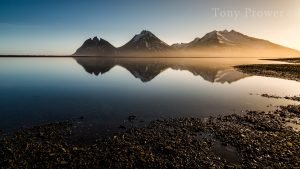
		<description><![CDATA[<p>The magic cloth technique was born out of the need to get the image right in the camera but to still increase the dynamic range of a scene.  Under normal circumstances, the top part of a landscape is brighter than the lower half.  Even with a mirror lake the difference can be a couple of stops.  In order to get the best exposure of both the land and the sky, photographers have traditionally used filters which are darker at the top and clear at the bottom.  These are called Graduated Filters (grad) and although they come in different colours, the most popular are Neutral Density (ND - Grad).  Neutral density adds no colour to the scene.  Aside from different colours, Grad filters come in different strengths - measures in stops. They also come as soft or hard grads.</p>]]></description>
		<wfw:commentRss>http://icelandaurora.com/blog/2010/07/20/tonys-magic-cloth-technique/feed/</wfw:commentRss>
		<slash:comments>0</slash:comments>
		</item>
		<item>
		<title>Cold climates</title>
		<link>http://icelandaurora.com/blog/2010/02/19/cold-climates/#utm_source=feed&amp;utm_medium=feed&amp;utm_campaign=feed</link>
		<comments>http://icelandaurora.com/blog/2010/02/19/cold-climates/#comments</comments>
		<pubDate>Fri, 19 Feb 2010 05:33:28 +0000</pubDate>
		<dc:creator>Tony</dc:creator>
				<category><![CDATA[Photography Techniques]]></category>
		<category><![CDATA[aurora borealis]]></category>
		<category><![CDATA[camera]]></category>
		<category><![CDATA[crampons]]></category>
		<category><![CDATA[dark]]></category>
		<category><![CDATA[digital]]></category>
		<category><![CDATA[DSLR]]></category>
		<category><![CDATA[footwear]]></category>
		<category><![CDATA[glacier]]></category>
		<category><![CDATA[gloves]]></category>
		<category><![CDATA[hands]]></category>
		<category><![CDATA[iceland]]></category>
		<category><![CDATA[landscape]]></category>
		<category><![CDATA[long exposure]]></category>
		<category><![CDATA[mittens]]></category>
		<category><![CDATA[night photography]]></category>
		<category><![CDATA[photography]]></category>
		<category><![CDATA[pictures]]></category>

		<guid isPermaLink="false">http://icelandaurora.com/blog/?p=648</guid>
		<description><![CDATA[<h6>When you are taking your camera into cold conditions, it will be wise to follow a few simple precautions to protect you and your gear.</h6>
<h4>Feet</h4>
<p>One of the most important thing to protect! They are, after all, what is going to get you out of potential danger.  You need to think about protecting them first and foremost.  Cold climates can present several different dangers to feet. The first is cold.</p>]]></description>
		<wfw:commentRss>http://icelandaurora.com/blog/2010/02/19/cold-climates/feed/</wfw:commentRss>
		<slash:comments>0</slash:comments>
		</item>
		<item>
		<title>Night Photography 2 &#8211; overcoming the darkness</title>
		<link>http://icelandaurora.com/blog/2009/11/27/night-photography-2-overcoming-the-darkness/#utm_source=feed&amp;utm_medium=feed&amp;utm_campaign=feed</link>
		<comments>http://icelandaurora.com/blog/2009/11/27/night-photography-2-overcoming-the-darkness/#comments</comments>
		<pubDate>Fri, 27 Nov 2009 05:20:30 +0000</pubDate>
		<dc:creator>Tony</dc:creator>
				<category><![CDATA[Photography Techniques]]></category>
		<category><![CDATA[aurora borealis]]></category>
		<category><![CDATA[bracketting]]></category>
		<category><![CDATA[camera]]></category>
		<category><![CDATA[composition]]></category>
		<category><![CDATA[dark]]></category>
		<category><![CDATA[depth of field]]></category>
		<category><![CDATA[digital]]></category>
		<category><![CDATA[DOF]]></category>
		<category><![CDATA[DSLR]]></category>
		<category><![CDATA[exposure]]></category>
		<category><![CDATA[focus]]></category>
		<category><![CDATA[hdr]]></category>
		<category><![CDATA[highlights]]></category>
		<category><![CDATA[hyperfocal distance]]></category>
		<category><![CDATA[iceland]]></category>
		<category><![CDATA[image]]></category>
		<category><![CDATA[landscape]]></category>
		<category><![CDATA[light]]></category>
		<category><![CDATA[long exposure]]></category>
		<category><![CDATA[multiple exposure]]></category>
		<category><![CDATA[night photography]]></category>
		<category><![CDATA[photography]]></category>
		<category><![CDATA[pictures]]></category>
		<category><![CDATA[spirit level]]></category>
		<category><![CDATA[white balance]]></category>
		<category><![CDATA[wonky horizons]]></category>
		<category><![CDATA[workshop]]></category>

		<guid isPermaLink="false">http://icelandaurora.com/blog/?p=796</guid>
		<description><![CDATA[<p>So you have the night photography bug. You sit twiddling your thumbs in the daylight hours waiting for the light to fade so that you can go out and leave your camera perfectly still with its  shutter open for many tens of minutes.  You are not alone!!</p>]]></description>
		<wfw:commentRss>http://icelandaurora.com/blog/2009/11/27/night-photography-2-overcoming-the-darkness/feed/</wfw:commentRss>
		<slash:comments>3</slash:comments>
		</item>
		<item>
		<title>Exposing to the right</title>
		<link>http://icelandaurora.com/blog/2009/11/01/exposing-to-the-right/#utm_source=feed&amp;utm_medium=feed&amp;utm_campaign=feed</link>
		<comments>http://icelandaurora.com/blog/2009/11/01/exposing-to-the-right/#comments</comments>
		<pubDate>Sun, 01 Nov 2009 12:55:10 +0000</pubDate>
		<dc:creator>Tony</dc:creator>
				<category><![CDATA[Photography Techniques]]></category>
		<category><![CDATA[adjustment]]></category>
		<category><![CDATA[auto-bracketting]]></category>
		<category><![CDATA[bracketting]]></category>
		<category><![CDATA[camera]]></category>
		<category><![CDATA[color]]></category>
		<category><![CDATA[colour]]></category>
		<category><![CDATA[exposure]]></category>
		<category><![CDATA[High iso]]></category>
		<category><![CDATA[highlights]]></category>
		<category><![CDATA[histogram]]></category>
		<category><![CDATA[image]]></category>
		<category><![CDATA[landscape]]></category>
		<category><![CDATA[multiple exposure]]></category>
		<category><![CDATA[night photography]]></category>
		<category><![CDATA[over-expose]]></category>
		<category><![CDATA[photography]]></category>
		<category><![CDATA[pictures]]></category>
		<category><![CDATA[RAW]]></category>
		<category><![CDATA[saturation]]></category>

		<guid isPermaLink="false">http://icelandaurora.com/blog/?p=645</guid>
		<description><![CDATA[<p>Until recently it was common practice for landscape photographers to slightly underexpose image to increase highlight detail and increase saturation. But there is a new school of thought which suggests over exposing just short of blowing out the highlights will actually give you a better range of colours.</p>]]></description>
		<wfw:commentRss>http://icelandaurora.com/blog/2009/11/01/exposing-to-the-right/feed/</wfw:commentRss>
		<slash:comments>0</slash:comments>
		</item>
		<item>
		<title>Photography techniques &#8211; Hyperfocal distance</title>
		<link>http://icelandaurora.com/blog/2009/10/27/photography-techniques-hyperfocal-distance/#utm_source=feed&amp;utm_medium=feed&amp;utm_campaign=feed</link>
		<comments>http://icelandaurora.com/blog/2009/10/27/photography-techniques-hyperfocal-distance/#comments</comments>
		<pubDate>Tue, 27 Oct 2009 10:13:47 +0000</pubDate>
		<dc:creator>Tony</dc:creator>
				<category><![CDATA[Photography Techniques]]></category>
		<category><![CDATA[adjustment]]></category>
		<category><![CDATA[camera]]></category>
		<category><![CDATA[depth of field]]></category>
		<category><![CDATA[digital]]></category>
		<category><![CDATA[DOF]]></category>
		<category><![CDATA[DSLR]]></category>
		<category><![CDATA[focus]]></category>
		<category><![CDATA[focusing]]></category>
		<category><![CDATA[focussing]]></category>
		<category><![CDATA[foreground]]></category>
		<category><![CDATA[hyper-focal]]></category>
		<category><![CDATA[hyperfocal distance]]></category>
		<category><![CDATA[image]]></category>
		<category><![CDATA[infinity]]></category>
		<category><![CDATA[landscape]]></category>
		<category><![CDATA[photography]]></category>
		<category><![CDATA[pictures]]></category>
		<category><![CDATA[sharpness]]></category>
		<category><![CDATA[tutorial]]></category>
		<category><![CDATA[workshop]]></category>

		<guid isPermaLink="false">http://icelandaurora.com/blog/?p=573</guid>
		<description><![CDATA[<p>Hyperfocal distance is the art in photography of achieving as much sharpness as possible throughout the image. In other words, it involves careful focusing adjustments to ensure that objects close to the camera and objects in the distance all have the same sharp focus, but more accurately, the hyperfocal distance is that point of focus where things are in focus from a point half way between you and the focal point all the way onward to infinity. Hyper-focal distance is more of a landscape photographer's concept. When shooting landscapes, I never use auto-focus.</p>]]></description>
		<wfw:commentRss>http://icelandaurora.com/blog/2009/10/27/photography-techniques-hyperfocal-distance/feed/</wfw:commentRss>
		<slash:comments>2</slash:comments>
		</item>
		<item>
		<title>Photography techniques &#8211; focus stacking</title>
		<link>http://icelandaurora.com/blog/2009/08/31/photography-techniques-focus-stacking/#utm_source=feed&amp;utm_medium=feed&amp;utm_campaign=feed</link>
		<comments>http://icelandaurora.com/blog/2009/08/31/photography-techniques-focus-stacking/#comments</comments>
		<pubDate>Mon, 31 Aug 2009 13:21:30 +0000</pubDate>
		<dc:creator>Tony</dc:creator>
				<category><![CDATA[Photography Techniques]]></category>
		<category><![CDATA[Photoshop Techniques]]></category>
		<category><![CDATA[Attempt to automatically Align Source Images]]></category>
		<category><![CDATA[Auto-Blend Layers]]></category>
		<category><![CDATA[blend]]></category>
		<category><![CDATA[blur]]></category>
		<category><![CDATA[cs3]]></category>
		<category><![CDATA[cs4]]></category>
		<category><![CDATA[depth of field]]></category>
		<category><![CDATA[DOF]]></category>
		<category><![CDATA[edit]]></category>
		<category><![CDATA[f/14]]></category>
		<category><![CDATA[f/8]]></category>
		<category><![CDATA[focus]]></category>
		<category><![CDATA[foreground]]></category>
		<category><![CDATA[hyperfocal distance]]></category>
		<category><![CDATA[layers]]></category>
		<category><![CDATA[Load layers]]></category>
		<category><![CDATA[macro]]></category>
		<category><![CDATA[mask]]></category>
		<category><![CDATA[paintbrush]]></category>
		<category><![CDATA[photography]]></category>
		<category><![CDATA[photoshop]]></category>
		<category><![CDATA[sharpness]]></category>
		<category><![CDATA[stacking]]></category>
		<category><![CDATA[sweet-spot]]></category>
		<category><![CDATA[workshop]]></category>

		<guid isPermaLink="false">http://icelandaurora.com/blog/?p=379</guid>
		<description><![CDATA[<p>This articles looks at a lengthy and complicated procedure to render every part of a scene with perfect focus. the aim is to achieve a high depth of field (DOF) whilst maintaining the high quality of your lens' sweet-spot. The main challenge is, maybe, deciding what situations exactly would require this sort of treatment. This technique is popular for macro work, where the DOF is usually too shallow to capture all the sharp detail in a subject. Landscape could benefit as there is a requirement for sharpness throughout the scene.  Usually an f/16 and careful hyper-focal calculations will achieve this. For my first attempt, I chose a landscape scene with a huge focal challenge. In this scene the immediate foreground is just a few inches from the front of the lens.</p>]]></description>
		<wfw:commentRss>http://icelandaurora.com/blog/2009/08/31/photography-techniques-focus-stacking/feed/</wfw:commentRss>
		<slash:comments>1</slash:comments>
		</item>
		<item>
		<title>Photography techniques &#8211; playing with water</title>
		<link>http://icelandaurora.com/blog/2009/08/22/photography-techniques-playing-with-water/#utm_source=feed&amp;utm_medium=feed&amp;utm_campaign=feed</link>
		<comments>http://icelandaurora.com/blog/2009/08/22/photography-techniques-playing-with-water/#comments</comments>
		<pubDate>Sat, 22 Aug 2009 15:36:51 +0000</pubDate>
		<dc:creator>Tony</dc:creator>
				<category><![CDATA[Photography Techniques]]></category>
		<category><![CDATA[beach]]></category>
		<category><![CDATA[blur]]></category>
		<category><![CDATA[long exposure]]></category>
		<category><![CDATA[milky]]></category>
		<category><![CDATA[rocks]]></category>
		<category><![CDATA[slow water]]></category>
		<category><![CDATA[smooth]]></category>
		<category><![CDATA[tide]]></category>
		<category><![CDATA[tripod]]></category>
		<category><![CDATA[waterfall]]></category>
		<category><![CDATA[waves]]></category>
		<category><![CDATA[workshop]]></category>

		<guid isPermaLink="false">http://icelandaurora.com/blog/?p=324</guid>
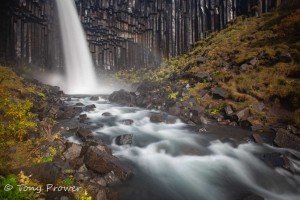
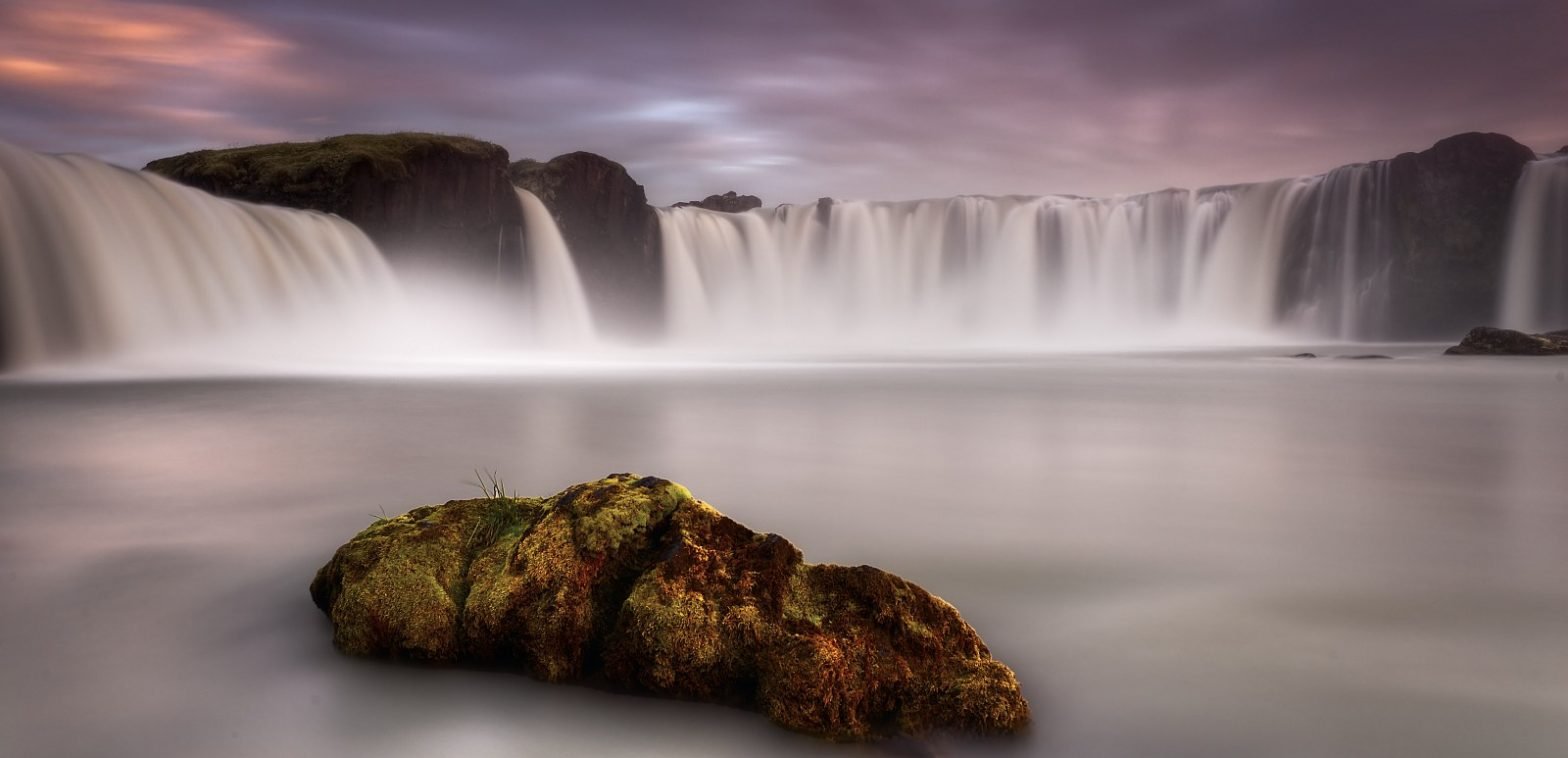
		<description><![CDATA[<p>We have all seen the photographs of waterfalls or beaches where the water has turned to milk. You either love it or your hate it, but regardless of that, it is a good way to come to understand shutter speed. this article looks at ways to give water that milky effect. First you need a camera and a source of flowing water. Not all of us are lucky enough to be living in Iceland. Next it is best to have a tripod or another way of keeping the camera perfectly still.</p>]]></description>
		<wfw:commentRss>http://icelandaurora.com/blog/2009/08/22/photography-techniques-playing-with-water/feed/</wfw:commentRss>
		<slash:comments>1</slash:comments>
		</item>
		<item>
		<title>Composition &#8211; following and breaking the rules</title>
		<link>http://icelandaurora.com/blog/2009/08/19/composition-following-and-breaking-the-rules/#utm_source=feed&amp;utm_medium=feed&amp;utm_campaign=feed</link>
		<comments>http://icelandaurora.com/blog/2009/08/19/composition-following-and-breaking-the-rules/#comments</comments>
		<pubDate>Wed, 19 Aug 2009 10:05:07 +0000</pubDate>
		<dc:creator>Tony</dc:creator>
				<category><![CDATA[Photography Techniques]]></category>
		<category><![CDATA[bokeh]]></category>
		<category><![CDATA[break the rules]]></category>
		<category><![CDATA[composition]]></category>
		<category><![CDATA[depth of field]]></category>
		<category><![CDATA[DOF]]></category>
		<category><![CDATA[frame]]></category>
		<category><![CDATA[Golden mean]]></category>
		<category><![CDATA[golden ratio]]></category>
		<category><![CDATA[intersections]]></category>
		<category><![CDATA[leading the eye]]></category>
		<category><![CDATA[lines]]></category>
		<category><![CDATA[rule of symmetry]]></category>
		<category><![CDATA[rule of thirds]]></category>
		<category><![CDATA[rules]]></category>
		<category><![CDATA[simplicity]]></category>
		<category><![CDATA[workshop]]></category>

		<guid isPermaLink="false">http://icelandaurora.com/blog/?p=304</guid>
		<description><![CDATA[<p>The rules of composition are guidelines for producing a well designed image. 'Guidelines' are probably a better description than 'rules' as they just help us as a kind of starting point. Do not break the rules until you are an expert at following them. You need to understand how they work and how they help you create great compositions. Learn the rules and then break them only if it will create a better image than if you followed them.</p>]]></description>
		<wfw:commentRss>http://icelandaurora.com/blog/2009/08/19/composition-following-and-breaking-the-rules/feed/</wfw:commentRss>
		<slash:comments>0</slash:comments>
		</item>
		<item>
		<title>Photography Basics &#8211; photography as communication</title>
		<link>http://icelandaurora.com/blog/2009/08/18/photography-basics-photography-as-communication/#utm_source=feed&amp;utm_medium=feed&amp;utm_campaign=feed</link>
		<comments>http://icelandaurora.com/blog/2009/08/18/photography-basics-photography-as-communication/#comments</comments>
		<pubDate>Tue, 18 Aug 2009 11:35:42 +0000</pubDate>
		<dc:creator>Tony</dc:creator>
				<category><![CDATA[Photography Techniques]]></category>
		<category><![CDATA[composition]]></category>
		<category><![CDATA[focus]]></category>
		<category><![CDATA[isolation]]></category>
		<category><![CDATA[leading]]></category>
		<category><![CDATA[object]]></category>
		<category><![CDATA[photography]]></category>
		<category><![CDATA[stepping stones]]></category>
		<category><![CDATA[subject]]></category>
		<category><![CDATA[workshop]]></category>

		<guid isPermaLink="false">http://icelandaurora.com/blog/?p=286</guid>
		<description><![CDATA[<p>Photography is all about communication. Communicating a scene or an object is similar to communicating in writing. It makes more sense if there is an order. Sentence take if we a...  Sorry, if we take a sentence and jumble the words up, it has the same contents, but the meaning is lost.  At the other extreme a poet can arrange the words to provoke feelings and thoughts outside of the sentence. In a visual way a photographer has to arrange the subjects/ objects in a scene so that they make sense, and artists will arrange object/ subjects in a scene to provoke emotions.</p>]]></description>
		<wfw:commentRss>http://icelandaurora.com/blog/2009/08/18/photography-basics-photography-as-communication/feed/</wfw:commentRss>
		<slash:comments>1</slash:comments>
		</item>
		<item>
		<title>Photography Basics &#8211; camera settings</title>
		<link>http://icelandaurora.com/blog/2009/08/18/photography-basics-camera-settings/#utm_source=feed&amp;utm_medium=feed&amp;utm_campaign=feed</link>
		<comments>http://icelandaurora.com/blog/2009/08/18/photography-basics-camera-settings/#comments</comments>
		<pubDate>Tue, 18 Aug 2009 10:40:35 +0000</pubDate>
		<dc:creator>Tony</dc:creator>
				<category><![CDATA[Photography Techniques]]></category>
		<category><![CDATA[action]]></category>
		<category><![CDATA[automatically]]></category>
		<category><![CDATA[Av - Aperture Priority]]></category>
		<category><![CDATA[camera]]></category>
		<category><![CDATA[control]]></category>
		<category><![CDATA[DSLR]]></category>
		<category><![CDATA[f/11]]></category>
		<category><![CDATA[f/16]]></category>
		<category><![CDATA[f/2.8]]></category>
		<category><![CDATA[f/22]]></category>
		<category><![CDATA[f/8]]></category>
		<category><![CDATA[landscape]]></category>
		<category><![CDATA[manual]]></category>
		<category><![CDATA[portrait]]></category>
		<category><![CDATA[Shutter Priority]]></category>
		<category><![CDATA[speed]]></category>
		<category><![CDATA[sports]]></category>
		<category><![CDATA[workshop]]></category>

		<guid isPermaLink="false">http://icelandaurora.com/blog/?p=270</guid>
		<description><![CDATA[<p>On a DSLR there is a choice of settings that allow you to have different levels of control over the camera. First you need to consider what you want to do, or to be precise, what kind of result do you want to achieve?</p>]]></description>
		<wfw:commentRss>http://icelandaurora.com/blog/2009/08/18/photography-basics-camera-settings/feed/</wfw:commentRss>
		<slash:comments>1</slash:comments>
		</item>
	</channel>
</rss>